Clay implementation framework for HubSpot teams
Get templates to scope a pilot, brief the research and define CRM update rules. Plan what Clay should enrich, what needs review and what your team will accept before you build.
- 16-page PDF guide
- 6 editable CSV worksheets
- Research brief + CRM write policy
Email required for download; name and company optional. Files open here, with no newsletter subscription. The guide uses synthetic examples.
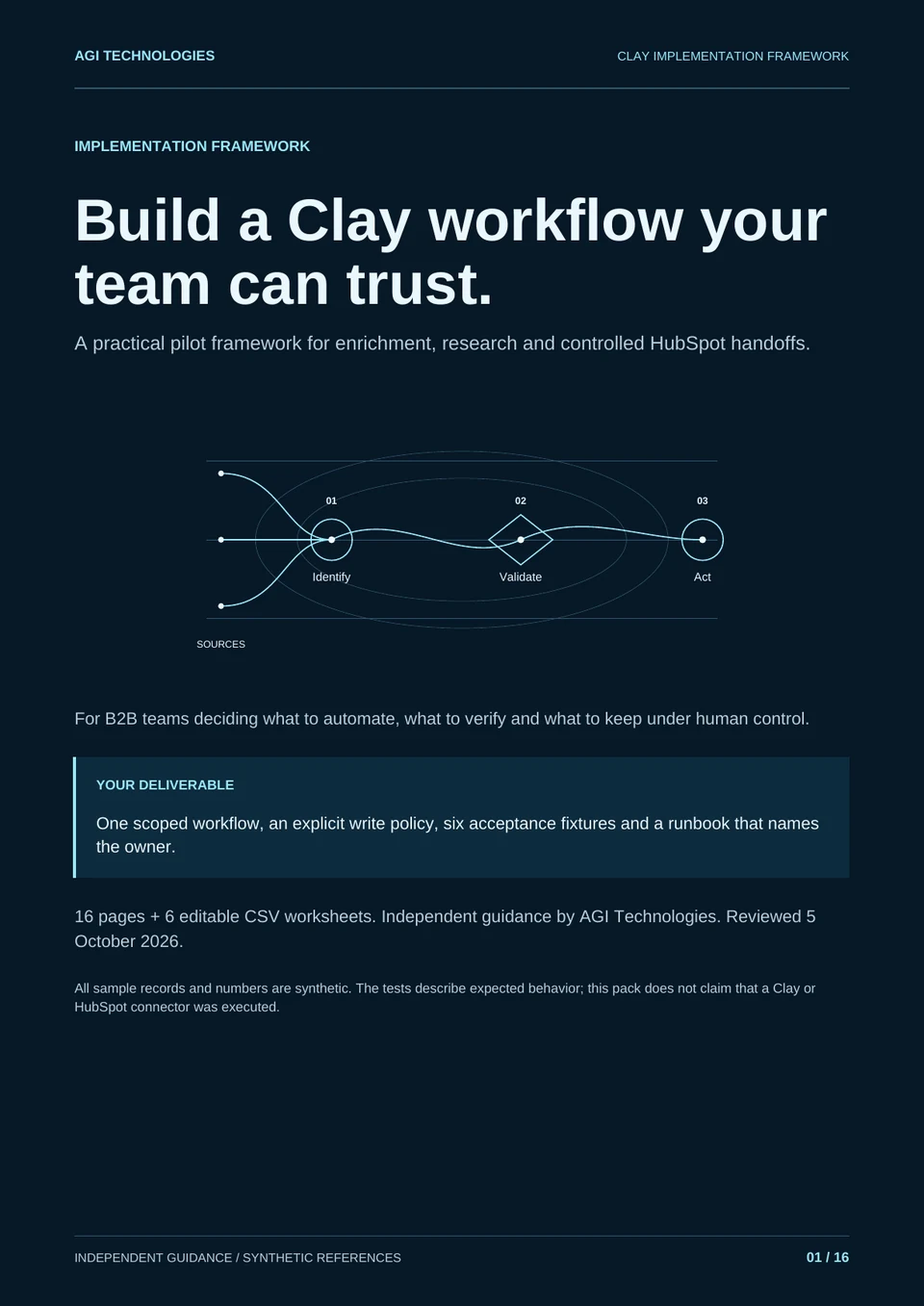
A look inside
Choose leads, research buyers and protect your CRM
These are real pages from the downloadable guide. Open any preview to read it in full, then use the editable worksheets to document your own decisions.
Choose the leads for your first pilot
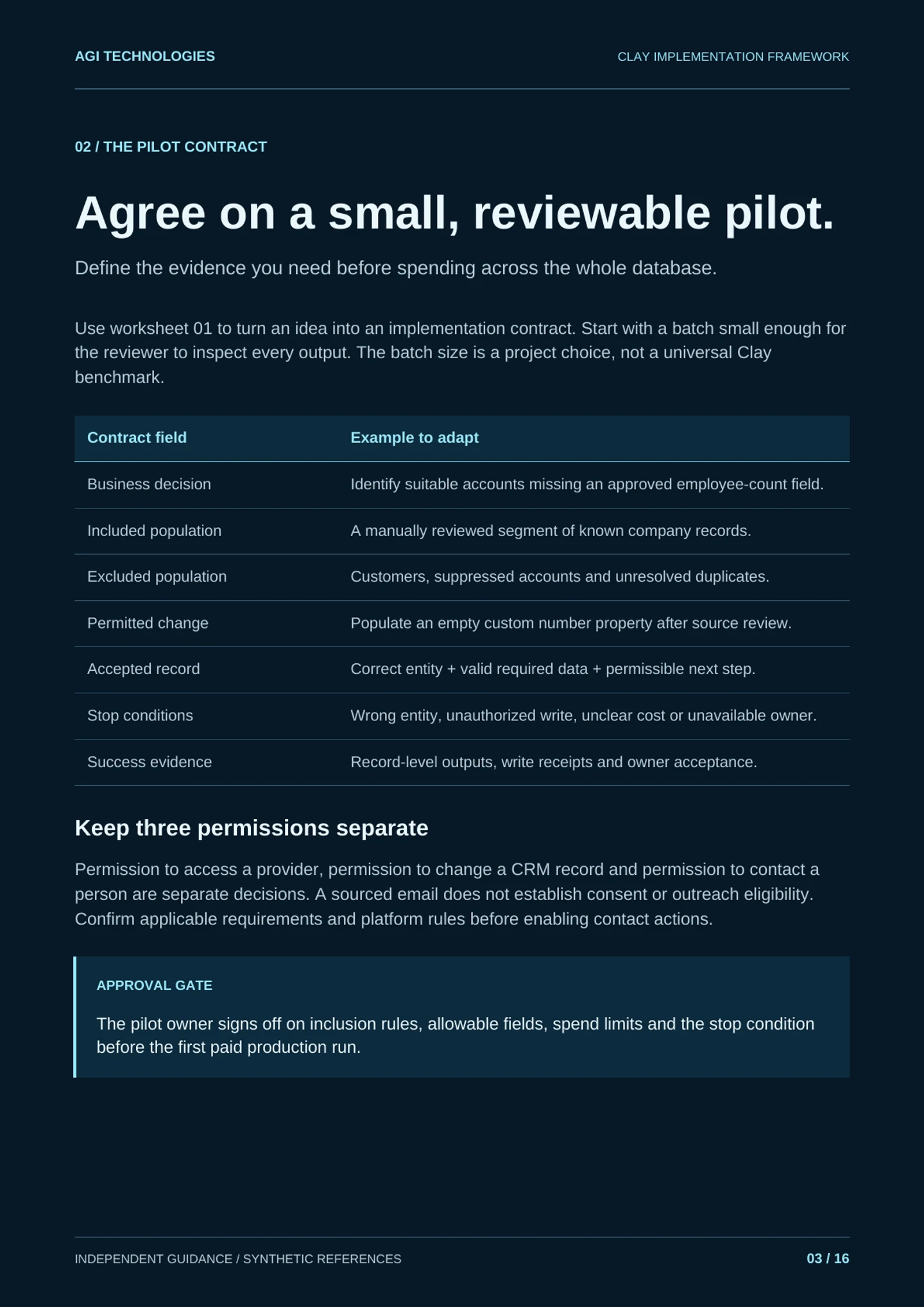
Define the evidence you need before spending across the whole database.
Agree the output, budget, review owner and stop conditions for one manageable pilot.
Enlarge page 3 (opens in a new tab)Research new revenue leaders before outreach
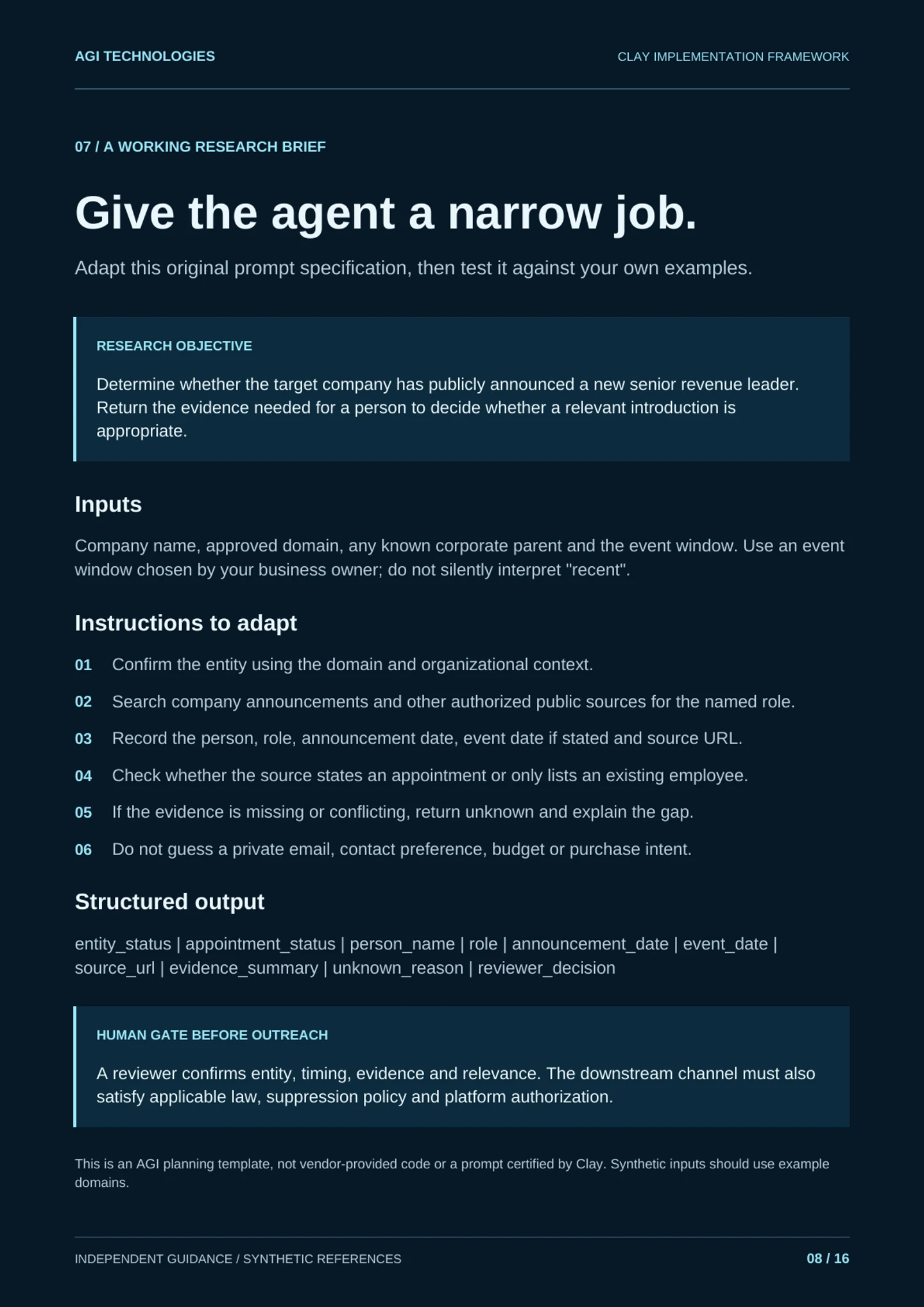
If the evidence is missing or conflicting, return unknown and explain the gap.
Use the senior-hire research brief to define the question, permitted sources and evidence a reviewer needs.
Enlarge page 8 (opens in a new tab)Protect your existing sales data in HubSpot
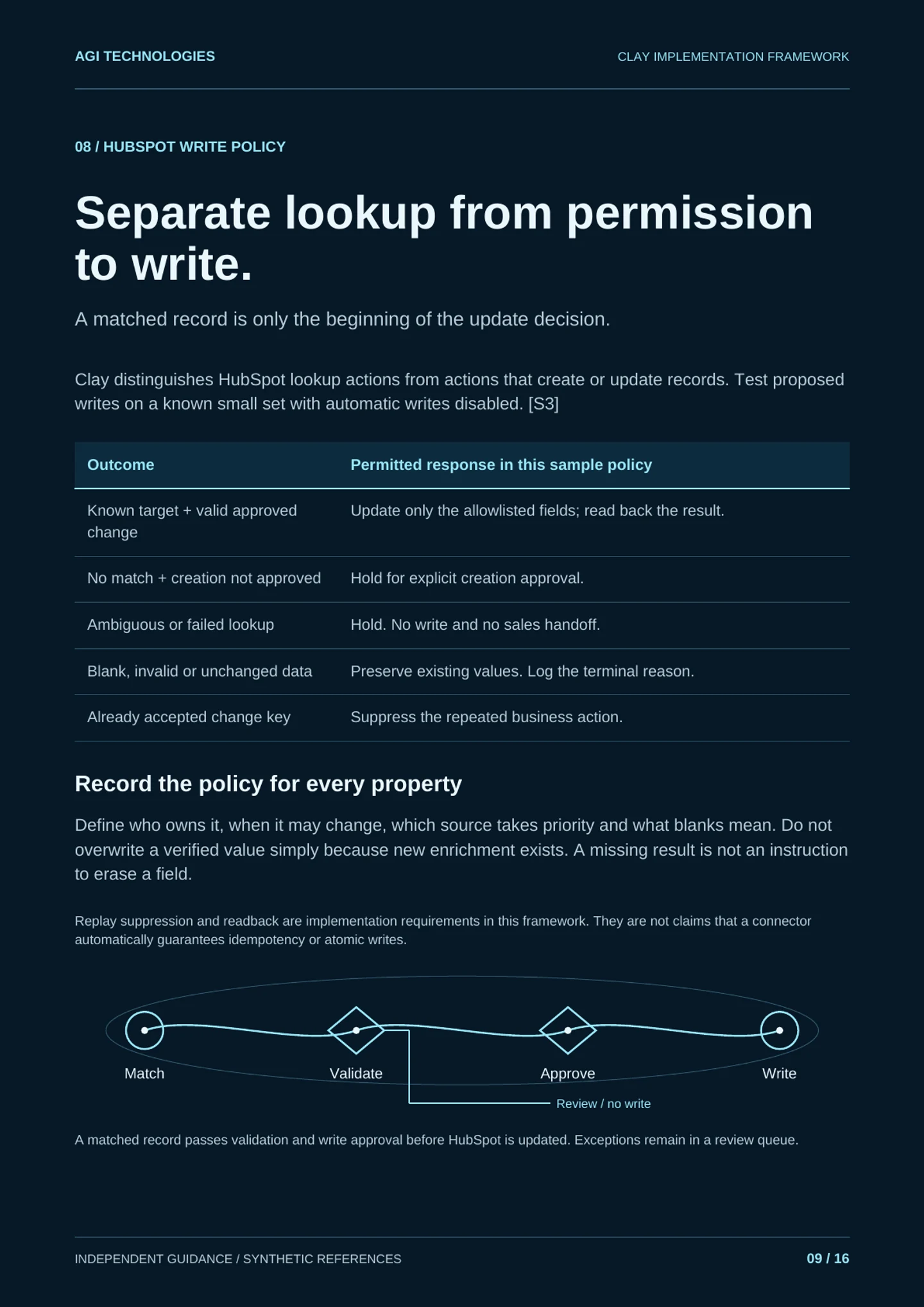
Update only approved fields, then check the saved value.
Define which fields may change, which values stay protected and when a record needs review.
Enlarge page 9 (opens in a new tab)The full pack connects pilot scope, identity, enrichment, research, review, CRM handoffs, testing and operating costs.
Get the guide + worksheetsWorksheet 02 / Field mapping
Keep control of your HubSpot sales data
Three rows from the editable CSV. The full worksheet also leaves space for your actual portal properties, field owner, approval and observed test results.
| Source field | Expected type | Write policy |
|---|---|---|
| company_domain | string | Use for identity review; no automatic overwrite |
| employee_count | number | Fill empty after acceptance |
| review_status | enumeration | Use portal-defined internal options |
Example rows. Replace them with your own portal properties.
Get the planning pack
Get the Clay implementation framework and worksheets
Enter your email to open the 16-page guide and six editable worksheets on this page. Name and company are optional. We save your request privately and do not send you an email. Implementation follow-up is optional.
Get the implementation pack
Share your email to open the guide and worksheets here. No email will be sent.
Your implementation pack
The download
What you need to plan your lead generation system
Get a PDF guide, six CSV worksheets and editable reference sources. Use them to turn a proposed use case into a reviewable implementation brief.
Define the lead your sales team needs
Name the person who acts on the output, the decision it supports and what an accepted record must contain.
Match leads to the right companies
Record identifiers, existing CRM values, source provenance and the fields each system may change.
Control enrichment and research spend
Separate basic qualification from deeper research. Define missing-value behavior and a useful unit of cost.
Keep uncertain leads out of outreach
Use clear pass, hold and exclude reasons. Keep unsupported conclusions and conflicting matches out of automatic action.
Give sales the data and next step
Specify which object and fields may be written, who owns the next step and how to handle repeats or failed actions.
Test your lead workflow before launch
Work through synthetic acceptance fixtures, review a small pilot and agree monitoring and rollback responsibilities.
The implementation sequence
From target accounts to a clear sales handoff
- 01
Define your target lead
Start with a buyer task such as qualifying an account or identifying a useful follow-up. Agree the output before choosing enrichments.
- 02
Check company identity
Establish the account key, source permissions and fields already held in the CRM. Resolve duplicate or conflicting identity before allowing a write.
- 03
Research the account
Run only the research needed for the decision. Require source evidence for useful facts and keep unknown separate from a negative result.
- 04
Review uncertain leads
Give uncertain records a reason and an owner. A missing source, ambiguous company or unsupported claim should go to review before it can reach an outreach queue.
- 05
Hand reviewed data to sales
Hand off accepted data through an agreed field and action policy. Specify protected values, repeat handling and failure recovery.
- 06
Monitor quality and spend
Inspect accepted output, spend and exceptions. Change the rules through a controlled review, and retain a way to stop writes or restore affected values.
A useful starting test
Check missing data and duplicate actions before launch
Use these planning decisions to check the policy with fictional records before a production pilot.
| Situation | Decision to agree | Expected boundary |
|---|---|---|
| No reliable company identifier | Hold and resolve identity | No CRM write until the target is confirmed. |
| Research has no supporting source | Mark the fact unknown or request review | No unsupported personalization claim. |
| Existing CRM field has a protected value | Retain it or require an explicit approval rule | No routine overwrite of an owned value. |
| The same input is received again | Define deduplication and repeat-action handling | No unreviewed duplicate record or repeated outreach. |
Who it is for
For B2B teams planning a repeatable lead pipeline
Use this pack when a GTM, RevOps or operations team needs a shared implementation brief before connecting Clay, a CRM and any research or outreach tools. It also helps a project owner review what an implementation supplier proposes.
The examples are synthetic. The pack does not connect to your Clay account. It cannot tell you your available market, enrichment coverage, deliverability or revenue. Product capabilities, subscriptions and source permissions still need checking against your actual setup.
Primary references
Check the current product behavior
The framework recommends an implementation policy. Confirm connector capabilities and run settings against current documentation and your subscription. Sources reviewed on 5 October 2026.
- Clay: Waterfalls
Provider sequences and run conditions for waterfall enrichment.
- Clay: HubSpot actions
Read operations, write operations and conditional update behavior.
- Clay: Claygent Builder
Agent configuration, reusable research and testing before deployment.
Scope the next step
Need help building your Clay and HubSpot lead workflow?
Explore AGI Technologies' Clay and HubSpot consulting scope for account research, enrichment and CRM handoffs. Implementation depends on your data, receiving system and operating requirements. To decide what to fix first in an existing setup, explore the Systems Readiness Review for Clay and HubSpot and its sample findings.